America's Story: Social Benefits Increase While Labor Productivity Decreases


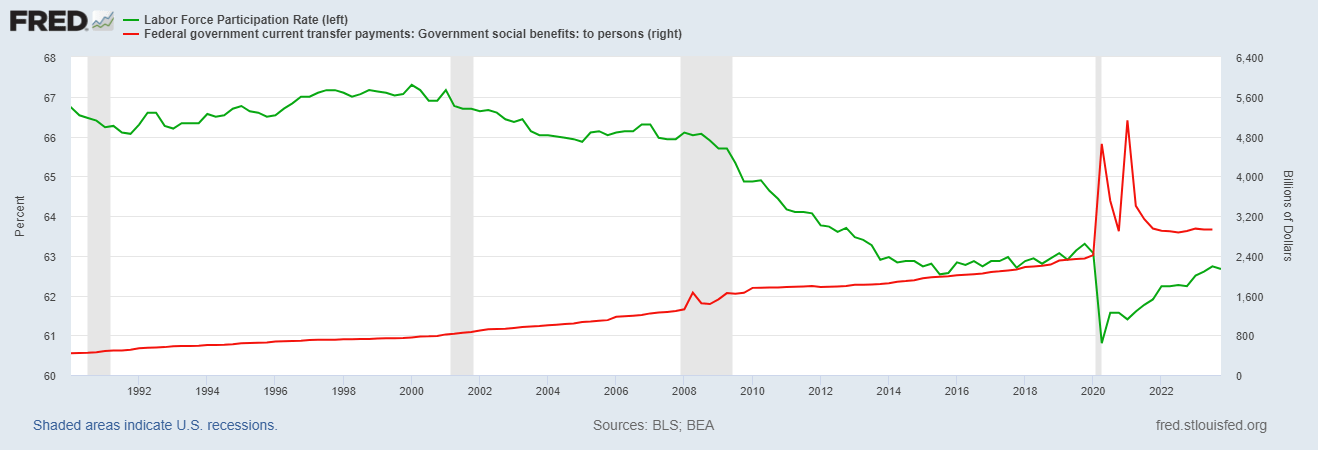
The Labor Force Participation Rate is the figure I observe to get a sense for labor productivity in the United States. It is interesting to review the Labor Force Participation Rate in conjunction with Government Social benefits. One can see the inverse nature between the two in the first chart below. As Government Social Benefits increase, the propensity to work decreases.
The Labor Force Participation Rate peaked at approximately 67% in Q1 2000. This rate is reflected by the green line in the below chart.
The red line displays Government Social Benefits to persons (measured quarterly, annualized).
One can see in the first chart that as Government Social Benefits increase, labor productivity decreases. When I speak of the “Nanny State” and the moral hazard it breeds, this is what I am speaking of. An increasing percentage of the population is living off of the Government.
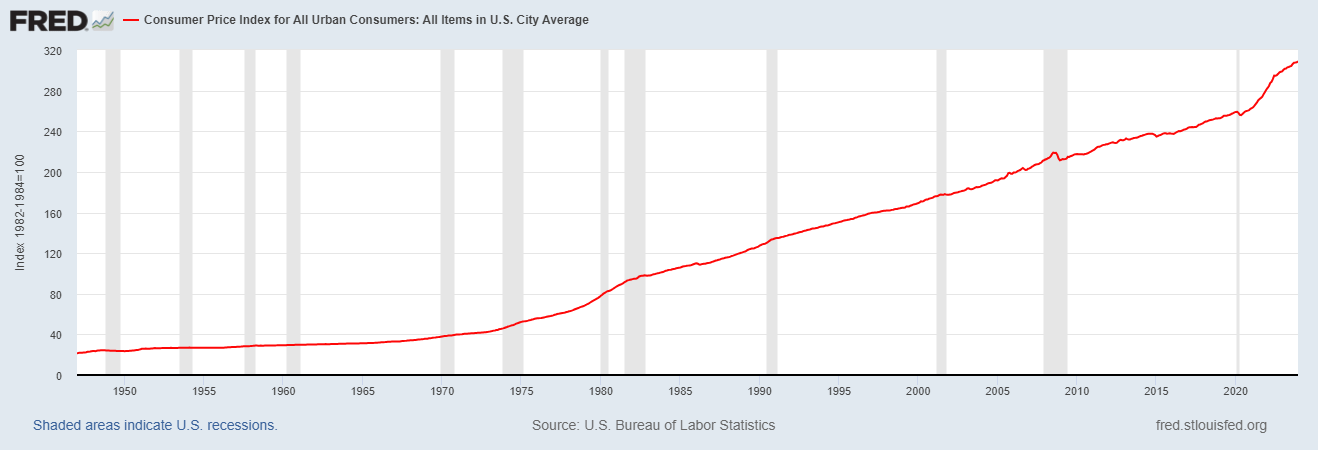
These Government Social Benefits contribute to the Dollar’s greatly reduced purchasing power (chart 2) as they require fiscal deficit spending which requires Treasury debt issuance which requires that the Federal Reserve subsidize newly issued Treasury debt (i.e. money printing). Every newly printed Dollar reduces the purchasing power of Dollars in circulation.
See our recent article as to how fiscal spending is allocated each year: HERE.