

First, on CPI (you may read the release HERE). I do not believe the numbers insofar as “Food at home” is concerned. One would be hard pressed to find a consumer that would say April grocery prices declined versus March. The Government’s own unadjusted numbers do not show a month-to-month decline in this category, it is only after the BLS applies its magical seasonal adjustment that the “Food at home” category saw a sequential decline. The month of May ought to bring more price increases when May CPI data is reported on June 12th.
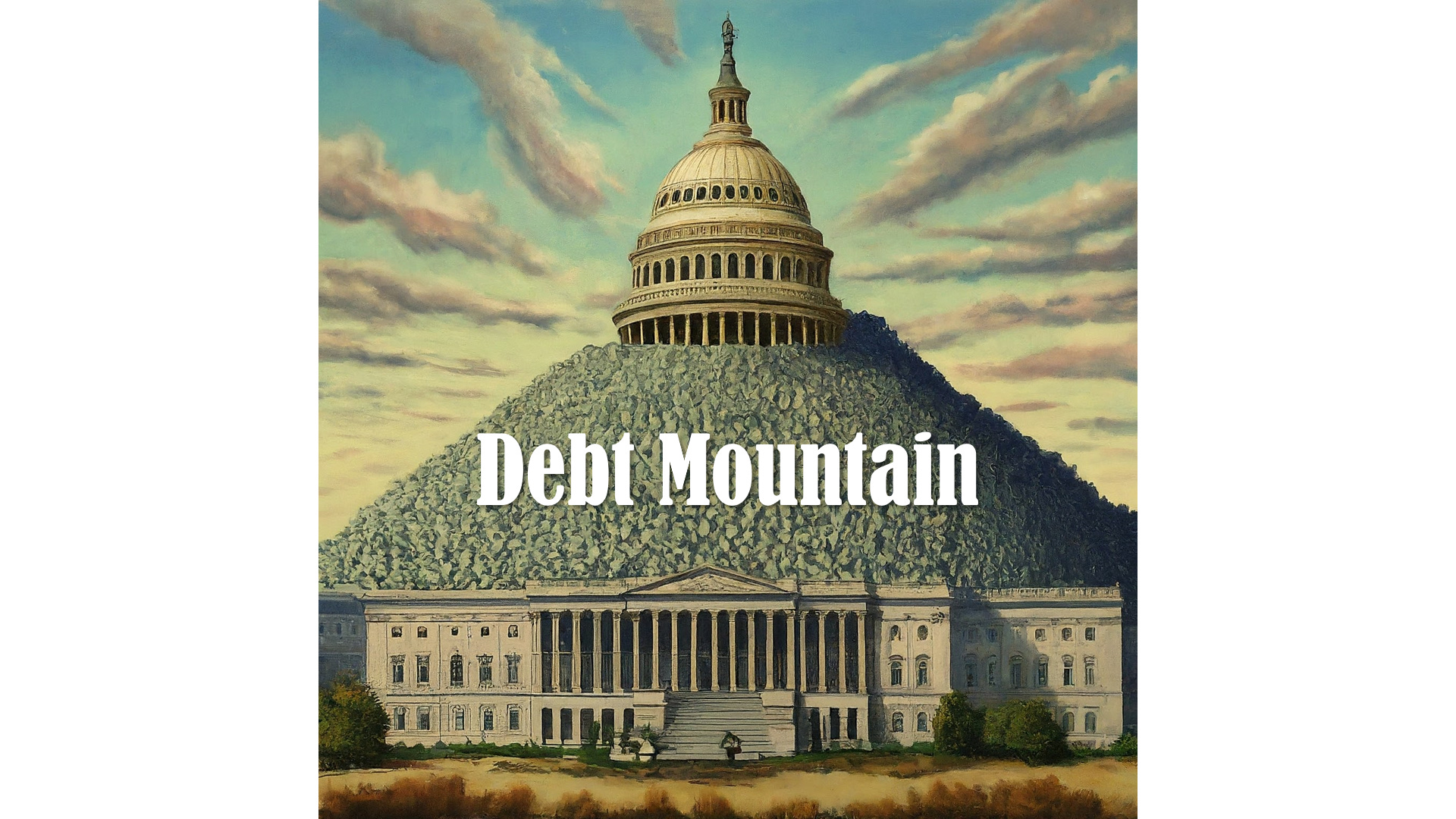
Second, yesterday Powell said that the Fed’s next move will not be a rate hike. The Fed is staring down the barrel of a $35 Trillion debt cannon. Treasury simply can’t afford to service this debt at 5% Fed Funds and therefore Powell and the Fed will eventually cave and lower rates. The Fed has already started to ease its QT program, which was never strong to begin with.
We are living the stagflation nightmare scenario at the moment where real economic growth ranges between slow (1% real) to negative, while debt remains high, interest service costs remain high (crowding out investment) and prices remain high. One could add to the mix that productivity remains low given the United States’ 63% labor participation rate.
The next 10 years will see the United States either: 1.) recover by taking its fiscal medicine and going on a starvation diet, or, 2.) more of the same, with rates headed back down to zero, more debt-funded fiscal spending, more Dollar devaluation and zero real economic growth as the United States further declines. Where are those that say debt does not matter?
Debt is the reason why the United States has experienced massive price increases since 2021 and all of the ancillary things that go with it (lesser product and service quality, scarce inventory, etc.)
Debt is the reason why the U.S. Dollar’s purchasing power will continue to erode.
Debt is the reason why the United States is a welfare state, spending $0.62 of every $1.00 on some type of welfare program or another.
Debt is the reason why the military’s budget is at $1 Trillion per year as it funds the purchase of weapons from the large Government contractors that control Congress. This is the military’s model - expand NATO so that the large Government contractors may sell weapons to those NATO countries.
Debt is the reason the Fed must subsidize Treasury’s issuances as sovereign nations simply do not have the appetite for United States paper given the U.S.’ dire fiscal situation. For example, China holds approximately $770 billion in U.S. Treasuries today, which is approximately 2% of the U.S.’ $35 Trillion debt load. Whereas 10 years ago China held approximately $1.25 Trillion of U.S. Treasuries, or approximately 7% of the United States’ $18 Trillion debt load. Not exactly a vote of confidence, is it? China has smartly traded U.S. Treasuries for gold - as everyone should.
Debt is the reason why the banks are hurting, having gorged on debt when rates were at zero percent. The hurting banking industry is another reason why the Fed is easing policy.
The Fed is also running at a loss and owes a big debt to Treasury, $167.8 billion as of last Wednesday (the Fed is paying out more than it takes in on its holdings).
If the United States was to go back on a gold standard, Treasury would not be able to issue paper at will nor run fiscal deficits at will as the Fed would not be able to print to help cover the deficits as the Fed’s ability to print would be tethered to U.S. gold reserves.
Short of going back on the gold standard, the United States could put itself on a radical fiscal diet, which would immediately strengthen the Dollar in real terms and strengthen the country. Economic might projects military might and the United States would be in a position to force peace through deterrence underwritten by economic might. At present the United States lacks anything resembling economic might.
The reason why the United States will not fix itself is because of the self-serving Congress. Congress has unfortunately succumbed to black bag diplomacy exercised by Corporate America.
It is time to throw out every member of Congress who does not “No” vote every spending bill, even if a particular spending bill has some good elements. Doing so will force Congress to separate omnibus spending bills into discrete spending bills.
Until such time, expect muted if any real economic growth, high prices, high debt, a weak Dollar, a weak military and weak foreign and domestic policy. This will be the case for the next 100 years or more until something changes. The good news is that the market will eventually force a change in Washington. Investors will want to be compensated for Washington’s unbridled spending. This means that 10-year Treasury yields could go from 4-5% today to 10%, 20% or even higher. It all depends upon what the market will demand in exchange for holding Treasury securities issued by a country that endlessly increases the supply of those Treasuries.