Federal Tax Receipts Show A Stagnant Economy

We published a book in April 2021 entitled Stagflation Is Imminent. Federal Receipts show just that - economic stagflation. Our view was and continues to be that the U.S. economy will be flattish for a decade.
The flattish economy is and will be a function of permanently higher prices (caused by the Fed’s inflating the money supply, March 2020 – May 2022) and slower fiscal spending growth rates coming off the breakneck pace of fiscal spending growth in 2021.
The first chart below plots Federal Spending (“Outlays”, the red line) with Federal Revenue (“Receipts”, the green line), as measured by the year-over-year percentage change in each at quarterly observations.
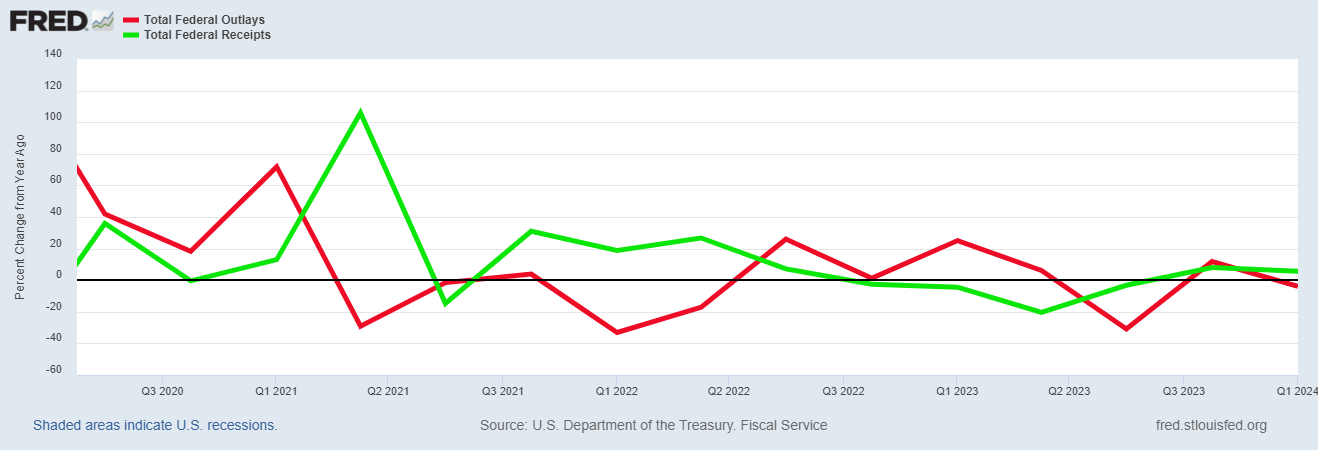
One can see the obvious relationship between Federal Outlays and Receipts. That relationship being as simple as the Federal Government puts money into the economy through its various spending programs (waste, waste, waste) and gets a portion of that spending back in the form of various Tax and Regulatory Revenue (“Receipts”).
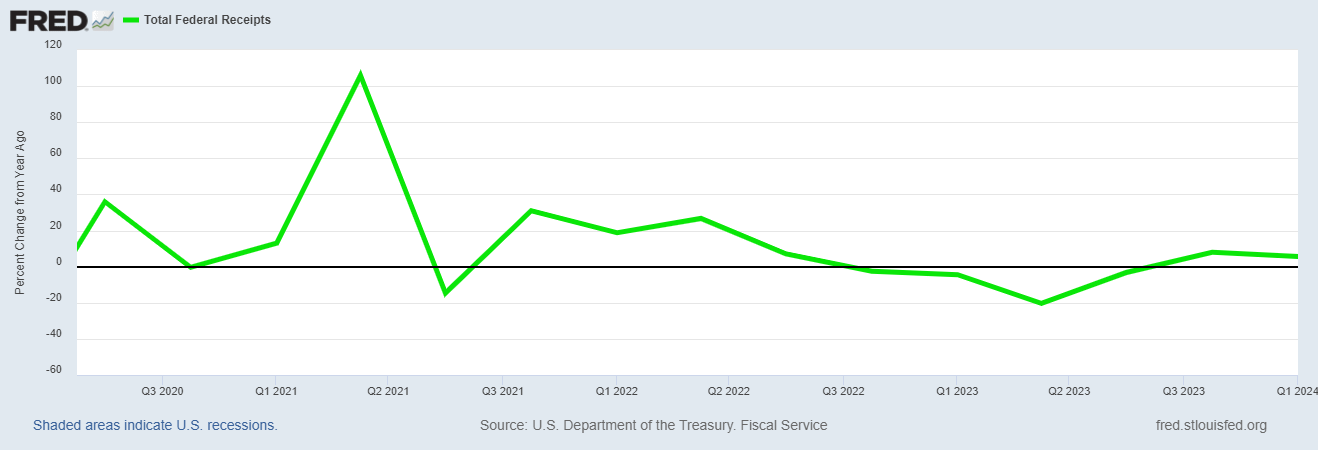
Think of Receipts as a proxy for the health of the U.S. economy. When companies and consumers earn more/less, the taxes they pay increase/decline, and therefore Federal Receipts increase/decline.
Chart 2 plots Federal Receipts, again measured by the year-over-year percentage change as observed each quarter.
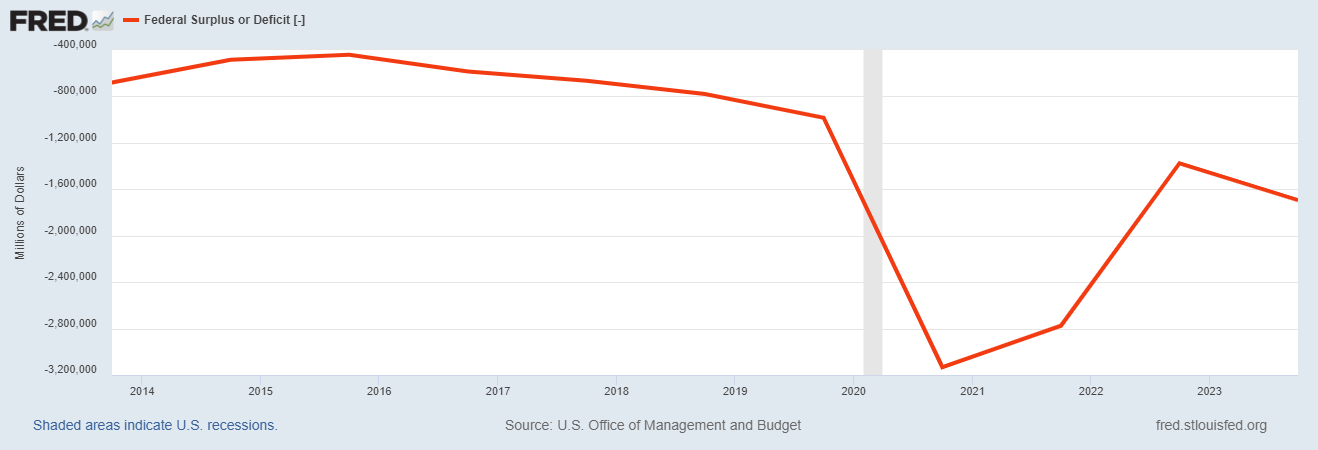
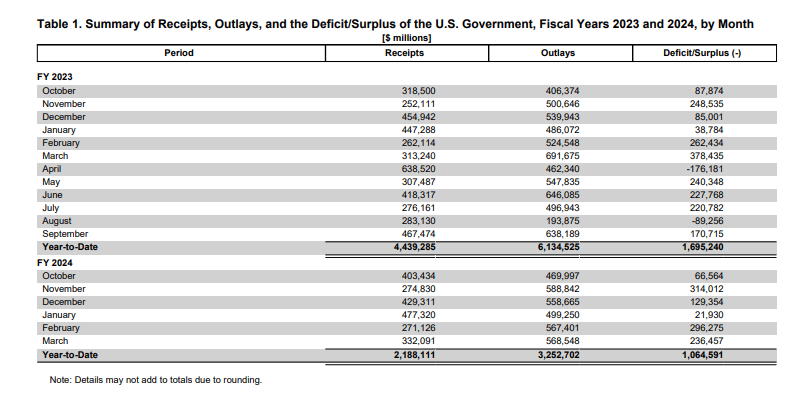
This is not to say that the Federal Government won’t unwisely ramp up fiscal spending this year or in future years in an effort to artificially stimulate the economy. In fact, we believe that the Federal Government will likely run a $2 Trillion deficit in fiscal 2024 (the fiscal year ends on September 30th), after posting a $1.7 Trillion deficit in fiscal 2023.
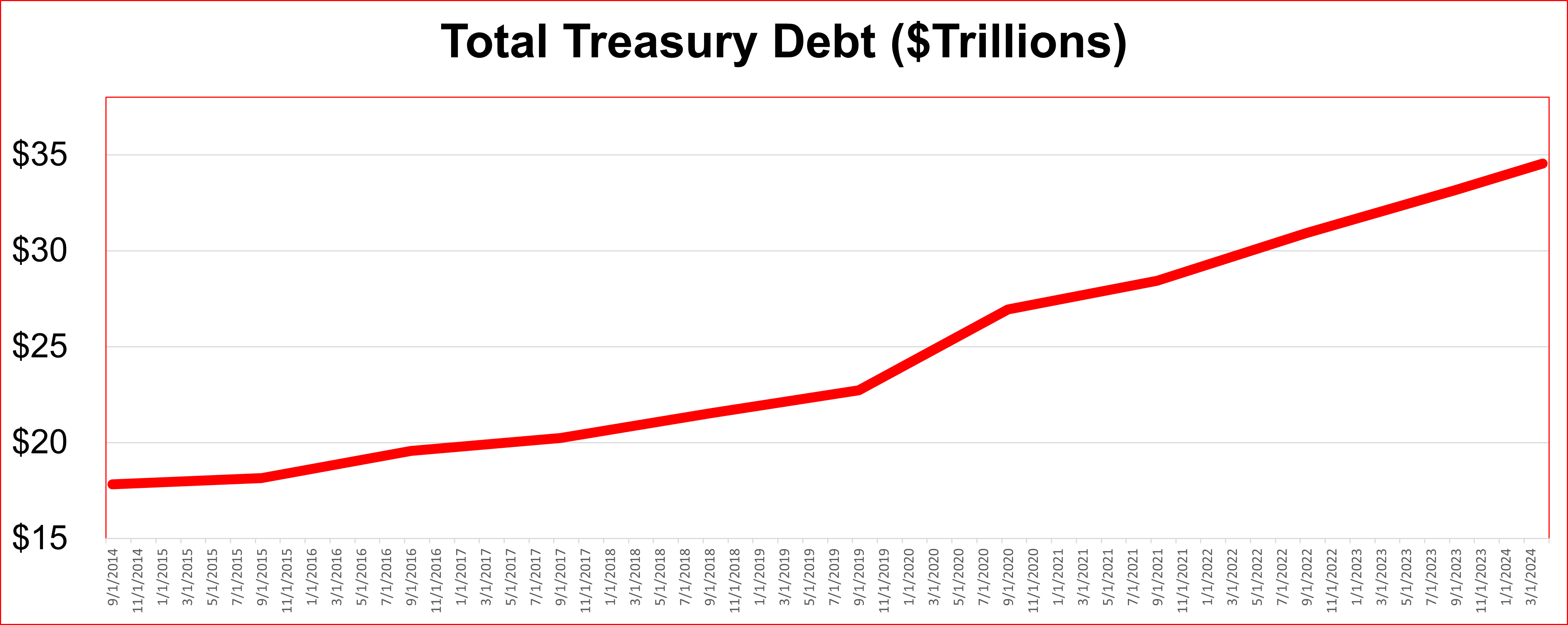
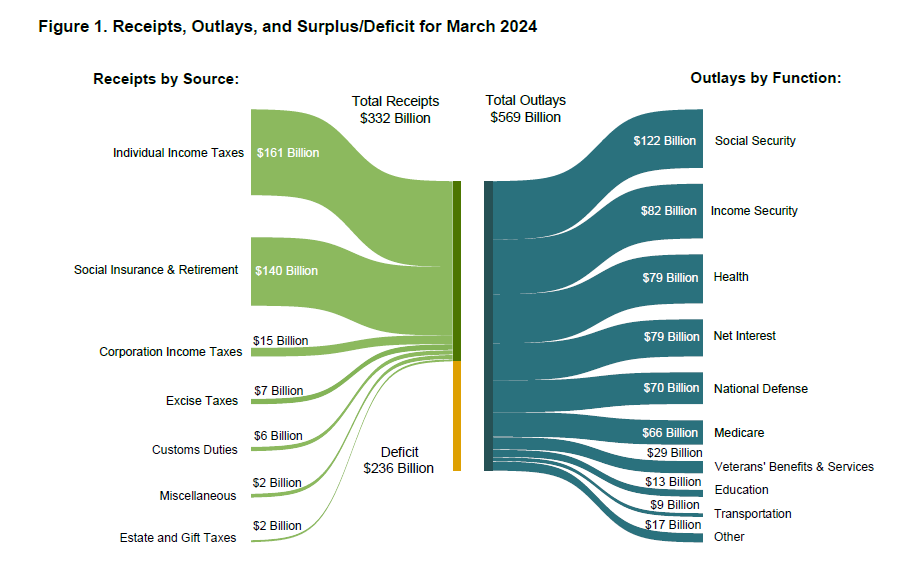
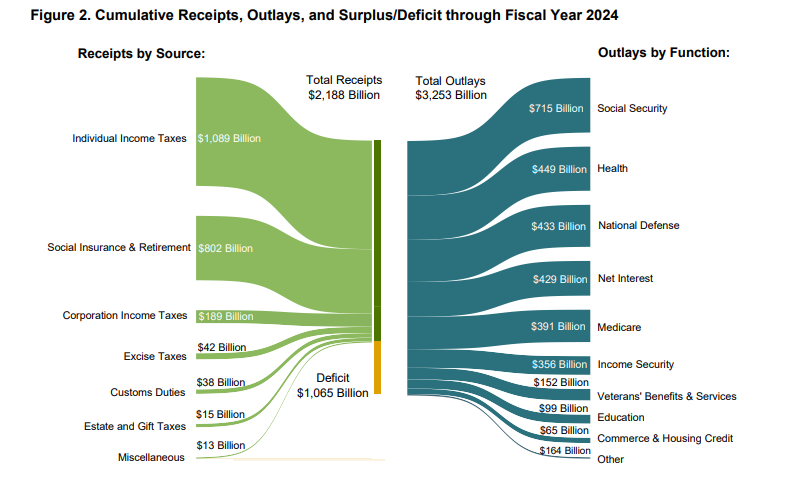
In case you are wondering, Federal Outlays far exceed Receipts (chart 3 below). One wonders how much longer such deficit spending may persist given the $34.6 Trillion in Treasury Debt outstanding and waning demand for Treasury securities.