
The Middle East Conflict Is Likely To Escalate

Given the United States’ lack of foreign policy leadership, greater conflict in the Middle East is likely to fill the leadership vacuum.
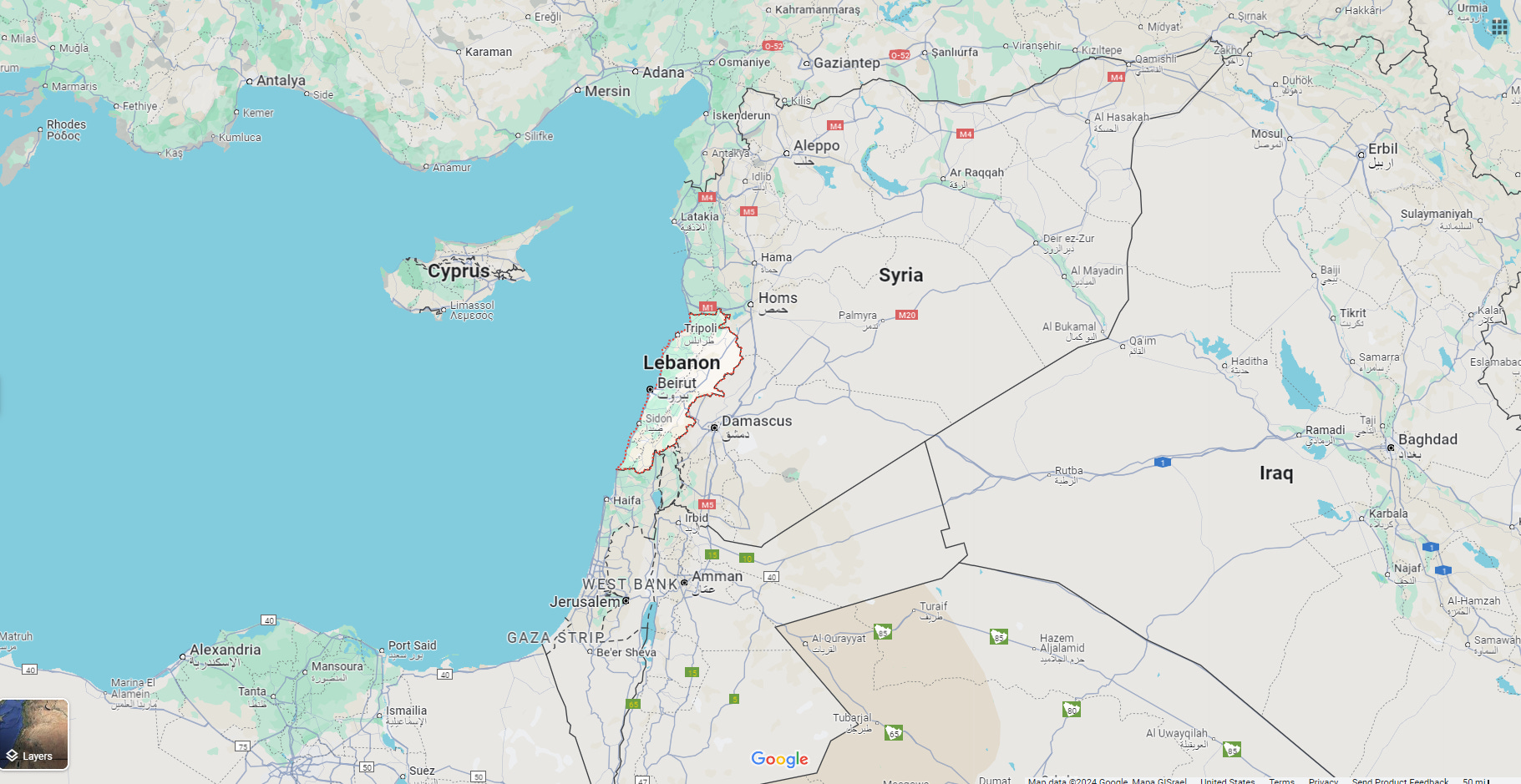
I have learned that Israel was offered a PMC solution whereby an American PMC would ramp up the fighting capabilities of the Lebanese military so that the Lebanese military could mitigate Hezbollah’s fighting capability and reduce Hezbollah to a political party-only (there are two military forces in Lebanon - the Lebanese military and Hezbollah).
Israel obviously rejected that option in order to move its forces into southern Lebanon, although it is a limited ground force. Nonetheless, by choosing the option to invade, Israel runs the risk of uniting the Lebanese military with Hezbollah’s military which would then see Israel try to pull the United States into a larger conflict.
With this U.S. Administration anything is possible. The U.S. has multiple levers to pull, yet does not wish to pull them:
Sanctions on Iran worked well in previous years and enabled the U.S. to exact a level of control over Iran and its proxies such as Hezbollah and the Houthis (the latter of which has closed the Suez Canal, costing Egypt’s economy greatly).
As it relates to Israel, the U.S. just shipped another $8 billion to Israel (a country of 10 million people), at a time when there is devastating flooding in North Carolina - without a response. I’m certain that if the U.S. closed its purse strings to Israel, their behavior would change.
I will leave the United States’ disastrous funding of the Ukraine war - a war that the U.S. State Department and CIA wanted - not Putin - for a separate discussion. I believe we are approaching a cost of $200 billion for this cluster.
Net, net, U.S. foreign policy is very expensive and ineffective. Approximately $1 trillion per year is spent on “defense” and political propaganda at a time when the Federal Government is running $2 trillion-plus annual deficits.