The "Pay as You Go" AI Pricing Model


Pay as you go pricing models are displacing subscription models because the model providers (OpenAI, Anthropic) charge corporate customers for usage via their API.
As a result, software companies that build software applications on top of the model providers are doing one of two things - moving toward pay-as-you-go pricing models - which keeps revenues aligned with costs, or they are inflating their subscription fees to protect against customer usage spikes.
To the latter point, let’s say for example that for 8 months of the year a given customer consumes the equivalent of $100 worth of usage for an app that sits on top of Anthropic, but in the other 4 months the customer consumes $300, $500, $250 and $700 worth of usage. You can see how a subscription model would break under that scenario. The app developer’s income statement would take a meaningful hit unless the developer over-priced its app at let’s say $1,000/month to protect against downside risk.
Alternatively, usage-based models align customer usage with vendor pricing. Under a usage based model, the app developer can price its applications at a spread over the usage fees it is charged by the model provider (developers buy credits from LLM providers for API usage and in turn sell usage credits at a markup over cost).
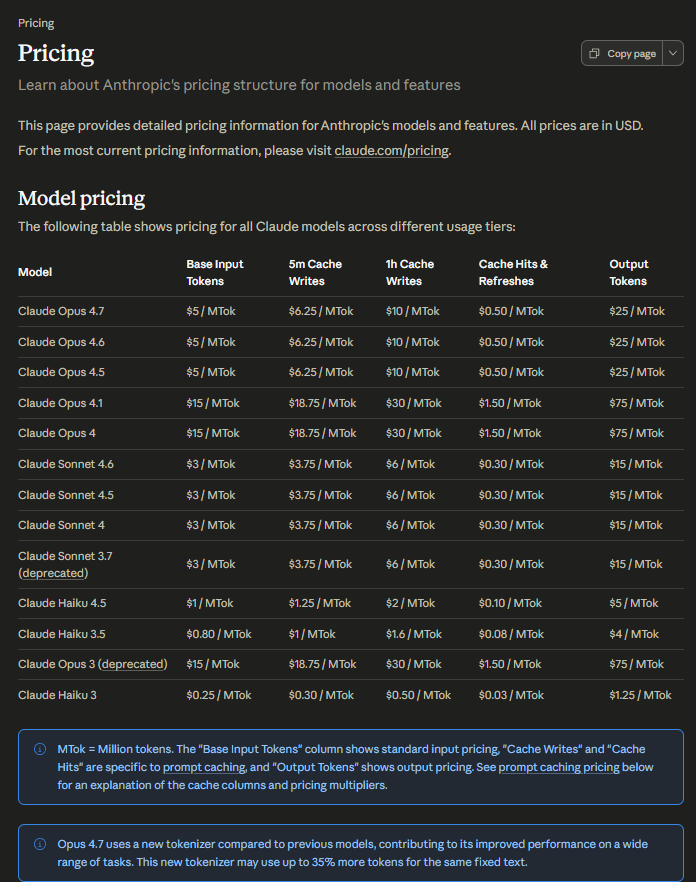
Here is Anthropic’s pricing sheet: https://platform.claude.com/docs/en/about-claude/pricing
A developer would charge a spread over these usage costs. This is fairly common today and will become the dominant Enterprise software pricing model for AI-infused applications.