The Red River of Government Spending

It is difficult to grow an economy in real terms when it is saddled with Government debt and a debased currency.
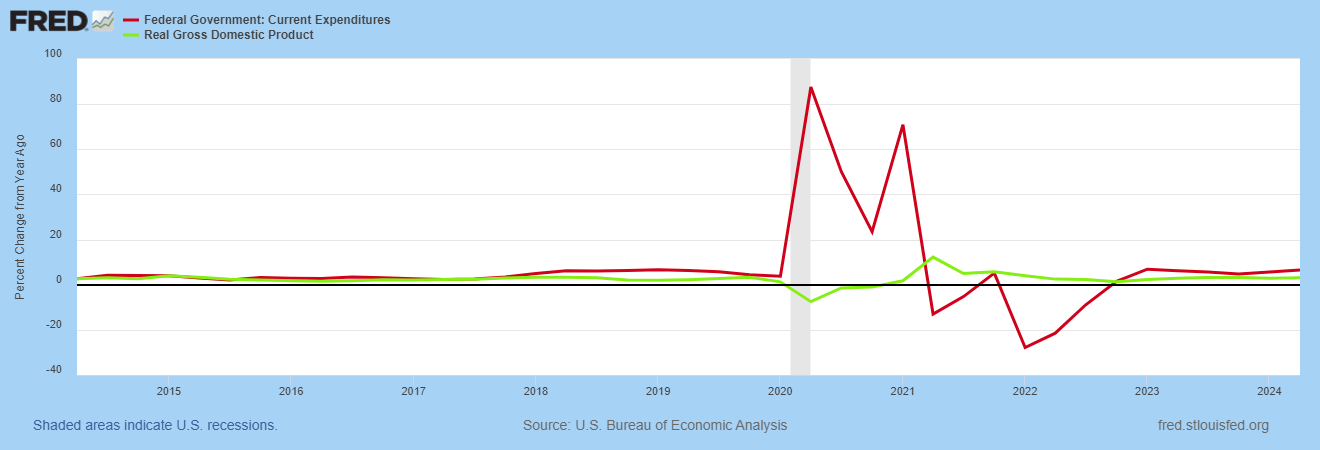
U.S. Government spending far outpaces Real GDP growth as does growth in Government debt. This trend needs to reverse itself, but I do not see that happening in the foreseeable future.
How does the U.S. pay down its debt? It issues new debt of course, a fair amount of which is purchased by the Federal Reserve, thereby requiring the printing of new Dollars, further devaluing Dollars in circulation (which is why consumer price growth has also outpaced Real GDP over the past few years). When President Nixon took the U.S. off the Gold Standard on August 15th 1971 it allowed the U.S. to print money at will. Gold no longer served as the Dollar’s collateral. Rather, the “full faith and credit” of the U.S. Government served as collateral. Sorry, when it comes to any government, I require more than faith. As the U.S. Government overspends, thereby diluting the Dollar’s value, Gold prices move higher. Investors correctly rotate into real money - i.e. Gold. Purely logical.
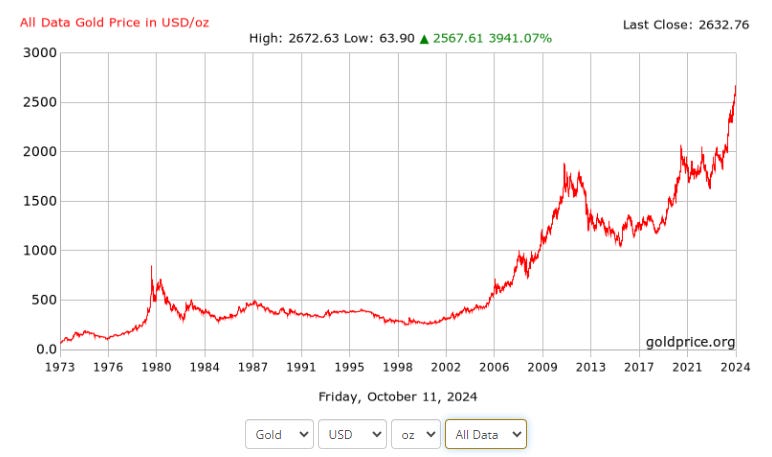
This is a vicious cycle, one that I do not see breaking over the next 5 or 10 years, unless of course the Treasury market forces discipline on Federal spending.
This chart plots Real GDP (green) vs. CPI (orange) vs. Federal Debt (red) as measured by the year-over-year percentage change in each. Notice how Debt and CPI each outpace Real GDP. Ideally, Real GDP ought to far outpace debt and price growth. Further, these are Government figures. Real world price increases are increasing far more than CPI, which means that Real GDP is overstated, which is why I believe Real GDP is around 0%, plus or minus depending upon the month.
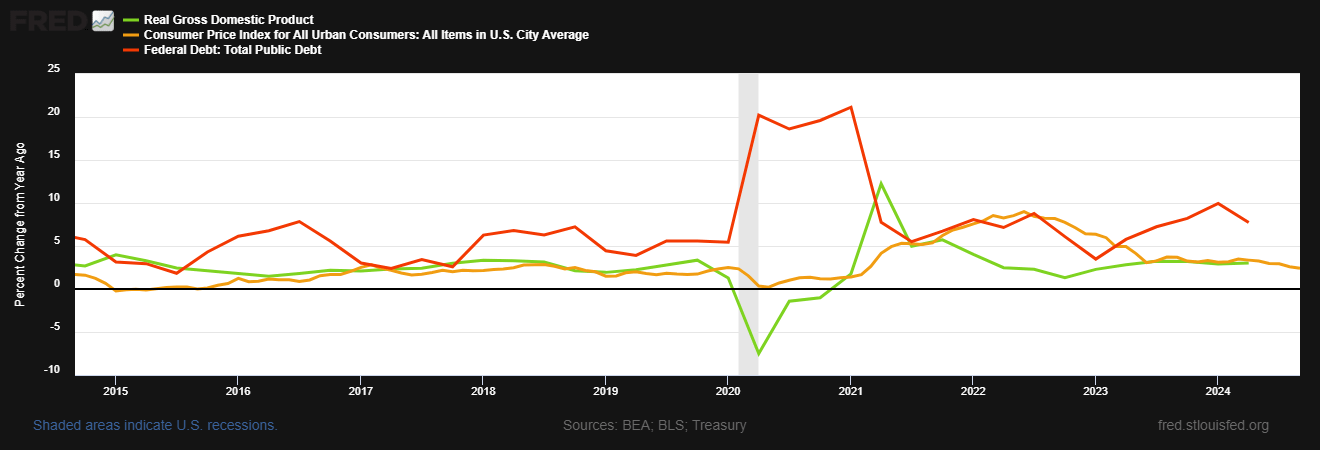
Here we have Federal Debt growth vs. Real GDP growth as measured by the year-over-year percentage change. Real GDP will never outpace Debt growth so long as the U.S. runs mult-trillion Dollar annual fiscal deficits.
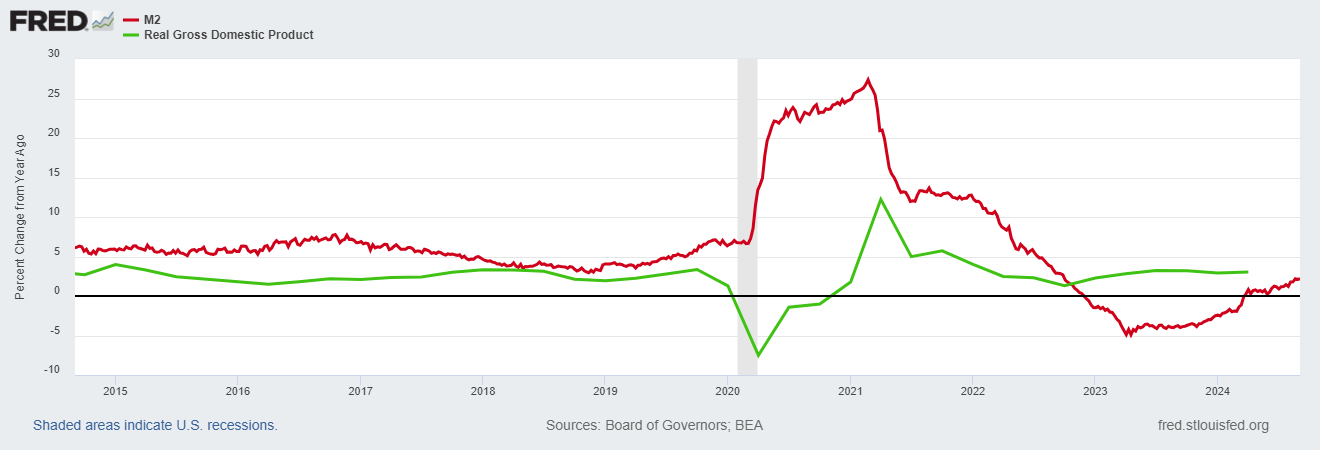
The U.S. grows the money stock (M2) faster than it grows Real GDP, meaning the Dollar’s purchasing power erodes faster than U.S. productivity.