
Why LLM Companies Should Own the IDE

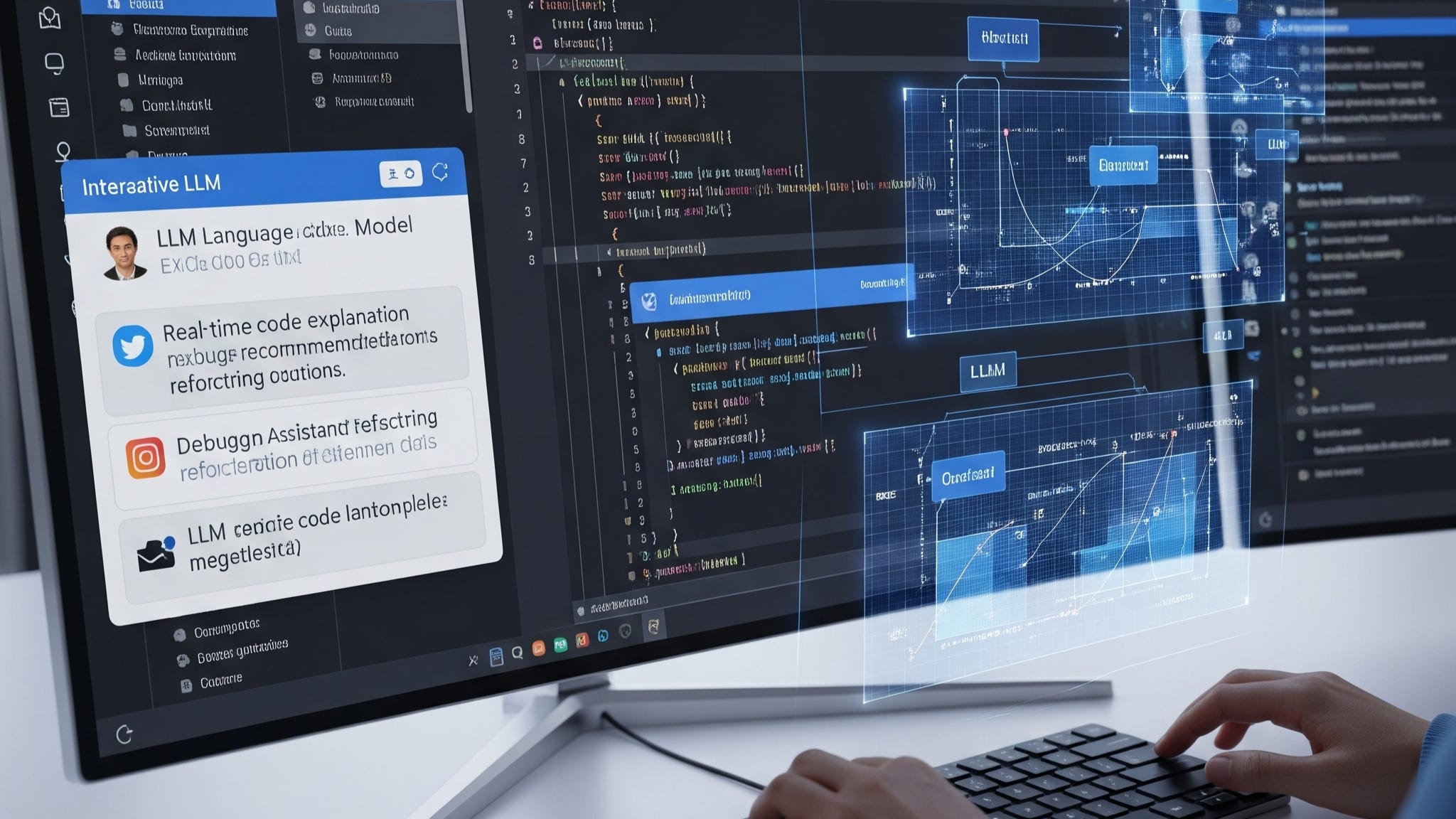
Large language models (LLMs) are reshaping software development. Tasks that once consumed hours - writing boilerplate code, debugging errors, drafting documentation - now take minutes. Developers are accelerating output and software applications are proliferating as a result.
This surge creates new demand for the tools that manage and coordinate software development.
The Integrated Development Environment (IDE)
The IDE as the Natural AI Interface. The IDE is where developers live. It is the browser of the software development world, the primary interface for creation. Development environments that include IDEs such as Visual Studio or JetBrains augmented by Copilot or Cursor are transitional hybrids.
The real opportunity is a proprietary, best-in-class, fully-integrated IDE designed around LLMs from the ground up. In an LLM-native development environment, developers wouldn’t just write code. They would direct an intelligent collaborator. The IDE would:
Scaffold entire projects from natural language.
Debug and patch errors in plain English.
Run tests, explain failures, and propose fixes.
Deploy to the cloud with simple natural language commands.
Maintain documentation in sync with code.
Enable developers and AI agents to build together in a shared workspace.
This shifts the developer’s role from code typist to conductor, orchestrating software through conversation.
How the LLM Leaders May Play It
OpenAI
Likely path: acquisition-driven integration.
ChatGPT already acts like a proto-IDE. But OpenAI’s attempt to acquire Windsurf (an AI-assisted coding tool) signals that it won’t rely solely on organic extensions. More recently, OpenAI announced the $1.1 billion all-stock acquisition of Statsig, a product experimentation platform, elevating its focus on product infrastructure and testing rigor.
These moves suggest OpenAI is committed to building a unified AI development platform - merging acquisition and integration - to reduce reliance on Microsoft (MSFT) and rapidly establish control over a next-generation IDE.
Anthropic
Likely path: acquisition.
Anthropic lacks OpenAI’s consumer-scale distribution. Acquiring an AI-native IDE like Cursor would provide a ready-made platform and developer base. Cursor already embodies the chat-first, repo-aware workflows that Claude could power. This would enable Anthropic to compete not only on model quality, but on developer experience.
Google (GOOGL)
Likely path: talent + tech integration (acquihire + licensing).
Google did not acquire Windsurf outright, but hired its CEO, cofounder, and key researchers in a $2.4 billion licensing and acquihire deal, while securing non-exclusive access to Windsurf’s code-generation technology. This deal strengthens Google Gemini and DeepMind’s “agentic coding” capabilities without regulatory scrutiny, showing how Google is betting on deep integration of top talent over full acquisition.
Talent as the Core Asset
Google has long operated on the belief that “owning the researchers means owning the future.”
The Windsurf acquihire is a perfect example: rather than buying the product outright (and attracting regulatory heat), Google acquired the leadership and engineering brain trust, while licensing the underlying tech. By bringing in Windsurf’s leadership, Google signals it understands the importance of the IDE layer. This adds to a roster that already includes DeepMind (London), Google Brain (merged into Google DeepMind in 2023), and numerous top-tier research labs.
For Google, the bet is that having the deepest bench of AI talent guarantees they can catch up - or leapfrog - when the market stabilizes.
Ecosystem Leverage
Unlike OpenAI or Anthropic, Google already owns multiple developer-facing distribution channels:
Android Studio (JetBrains-derived IDE for mobile developers).
Colab (widely used by ML researchers and students).
Google Cloud Platform (GCP) (where AI/ML workloads increasingly run).
Workspace (Docs, Sheets, Gmail — ripe for AI copilots).
Google’s play isn’t just to own one tool, but to weave Gemini into every touchpoint of a developer or knowledge worker’s day.
The long-term goal is clear: make Gemini unavoidable across consumer, enterprise, and developer workflows.
xAI (Elon Musk)
Likely path: build or acquire.
xAI’s brand is speed and independence. An “X IDE” integrated into the broader X ecosystem could appeal to indie developers and startups. Cursor again would be a natural target, but Musk could also commission a greenfield build - lightweight, fast, and tightly coupled to xAI’s models.