AI Pricing - Consumption and Hybrid Models Replace Subscriptions

Several housekeeping items before I get to AI pricing:
1.) Our TEK2day article archives are now free to access.
2.) The Kilby earnings transcript “debrief” product that I mentioned yesterday is now publicly available HERE as we completed testing.
3.) The next in-depth article that I publish will likely cover the state of AI, specifically the “harness” and “agentic” layers. The AI industry has invested heavily in infrastructure from data centers (AMZN, Anthropic, GOOG, META, MSFT, OpenAI, ORCL, etc.) to DC connectivity suppliers (CSCO, CIEN, ADTN, Huawei, etc.) to silicon producers (NVDA, AMD, AVGO, INTC, etc.) to AI governance and analytics (AMZN, GOOGL, MSFT, ORCL), to LLMs (AMZN/Kiro, Anthropic, Google/Gemini, IBM, META, Mistral, MSFT, OpenAI, etc.), but the real innovation is happening at the harness and agentic layers where companies are wrapping intelligence around the LLMs - and running fast to do so as LLMs rapidly enhance their capabilities.
AI has changed the way software companies price their various offerings including applications and AI agents.
I touched on this subject a couple of weeks ago.
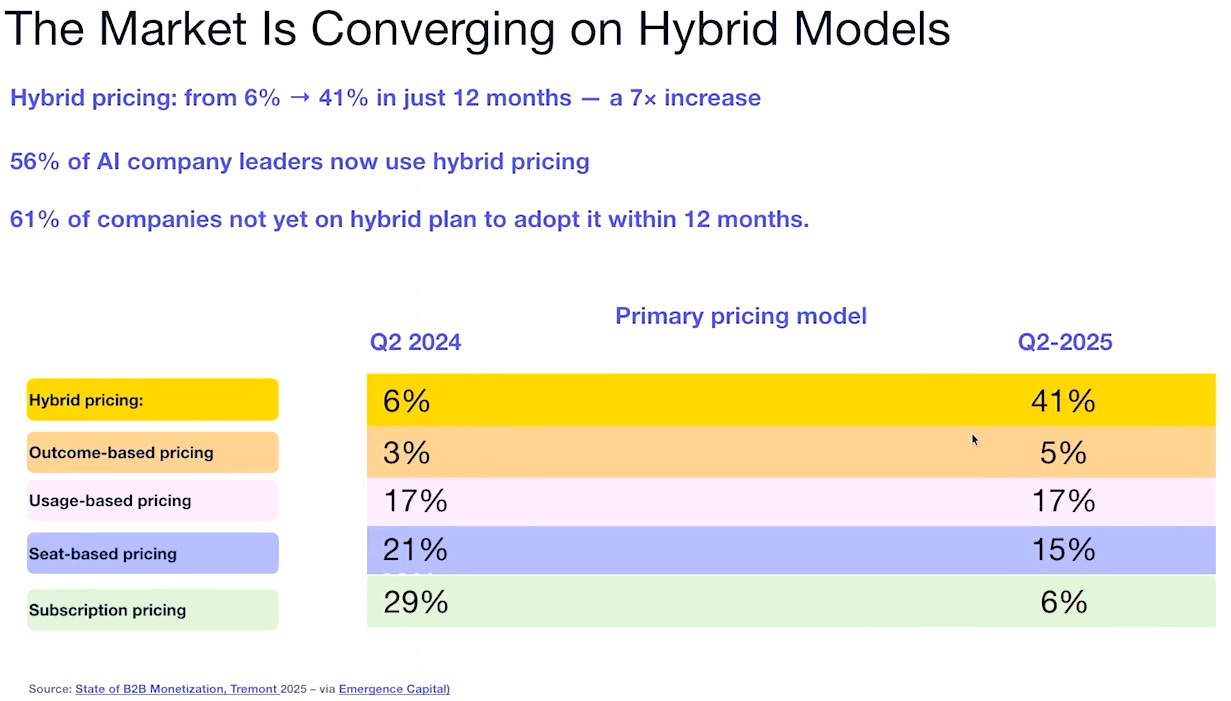
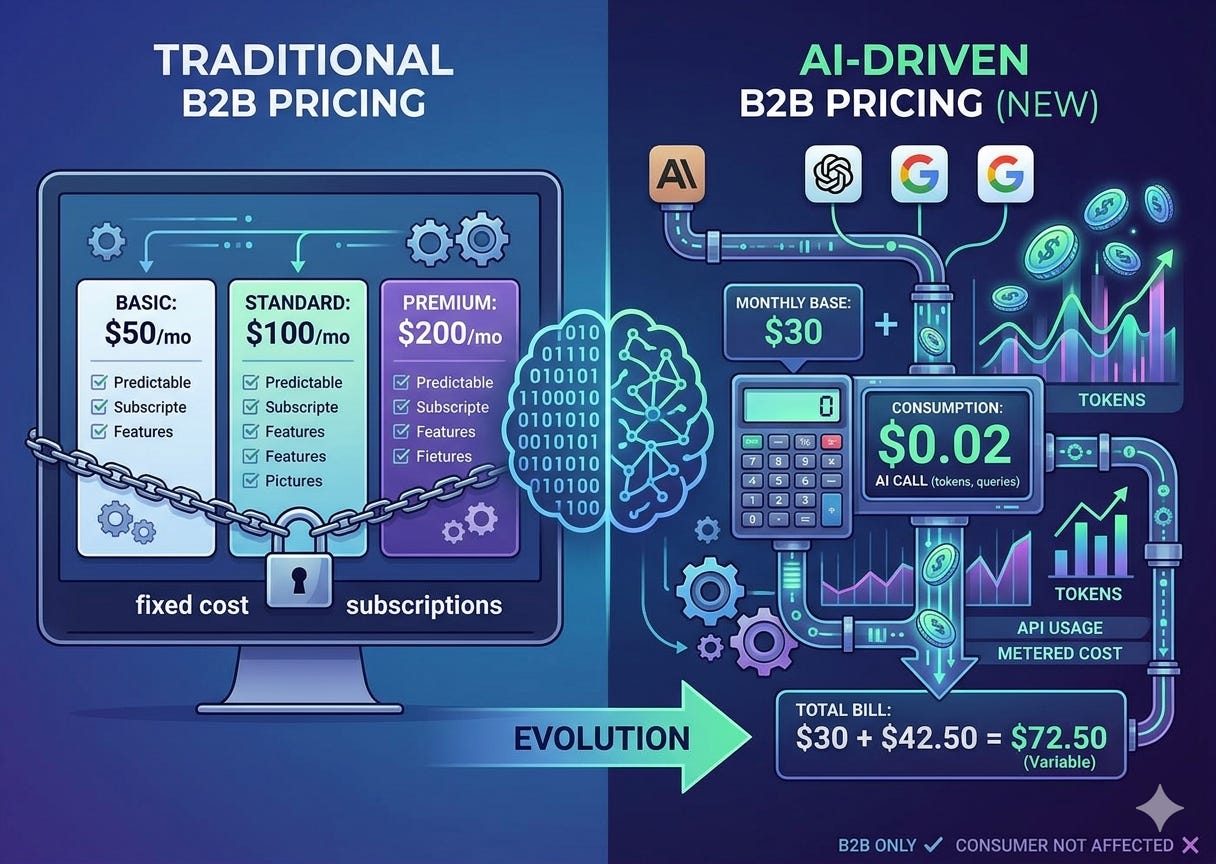
The reason for this pricing evolution is because software companies that build on top of Anthropic (as we have done at Kilby), OpenAI, and Gemini are charged consumption fees by the model companies for API usage. Software companies in turn pass the API fee cost on to users either via a straight consumption-based model or hybrid model (hybrid = baseline fee plus consumption fee above a certain threshold), whereas fewer companies are charging straight subscriptions.
This trend will continue as more Software companies bake AI into their B2B offerings. I do not believe these pricing changes will bleed into Consumer offerings other than for consumers who are heavy users of AI-imbued products.
The below graphic comes from a talk that the payments company Stripe published two days ago. I have included that talk as well.